
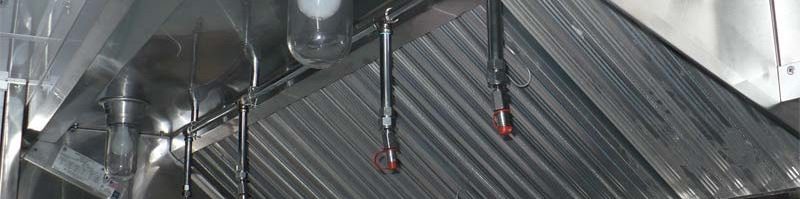
Wet Chemical Fire Suppression Systems
B-Lann Equipment installs and/or services a variety of wet chemical fire suppression systems:
- Ansul R-102 (install, inspect, and service)
- Amerex Kitchen Systems (inspect and service)
- Mechanical
- Pneumatic
- Electronic
- Buckeye Kitchen Mister (install, inspect, and service)
- CaptiveAire Tank (install, inspect, and service)
- Kidde Range Guard (inspect and service)
- PyroChem Knight I (inspect and service) and II (install, inspect, and service)
A wet chemical fire suppression system is a liquid-based active fire protection solution made specifically to suppress high-temperature fires involving cooking oils and fats (Class K fires). These systems are indispensable in commercial cooking environments where conventional suppression methods are inadequate.
How Wet Chemical Fire Suppression Systems Work
When activated, the system discharges a solution of potassium acetate or potassium carbonate—the wet chemical agent—through a network of nozzles mounted above the cooking area, appliances, and in the exhaust hood/duct system. Wet chemical is highly effective because it works primarily by initiating the chemical process of saponification:
- Saponification. When the liquid agent contacts burning fat or oil, it reacts to create a non-combustible, soapy foam blanket that quickly seals the surface.
- Smothering and cooling. This blanket immediately cuts off the oxygen supply to the fire. The water content in the liquid agent provides a cooling effect, dropping the temperature of the oil below its auto-ignition point.
- Vapor suppression. The soapy layer prevents flammable vapors from rising, ensuring the fire is extinguished and cannot reignite.
This mechanism makes wet chemical systems the required defense for Class K fires, which involve combustible cooking media.
Industries and Situations Where Wet Chemical is Used
Wet chemical fire suppression systems are a regulatory necessity in any commercial setting that operates cooking appliances. They are commonly used in:
- Commercial kitchens. Restaurants, hotels, cafeterias, and any establishment using deep fryers, griddles, ranges, and charbroilers.
- Institutional food service. Hospitals, schools, and correctional facilities that operate large-scale institutional kitchens.
- Mobile food trucks. Specialized, smaller wet chemical systems are essential for protecting the cooking equipment in mobile food service vehicles.
- Food processing plants. Areas where large vats of cooking oil or fat are heated and processed.
The Importance and Benefits of Wet Chemical Systems
Wet chemical systems are important because they are the only reliable and code-compliant method for controlling intense, high-temperature kitchen fires fueled by modern cooling oils.
- Code compliance. These systems are mandated by fire codes and NFPA 17A for the protection of cooking areas, ensuring businesses meet safety regulations.
- Class K mastery. They successfully control and suppress high-heat, high-flashpoint vegetable oil fires, which are often immune to dry chemical agents.
- Effective suppression. The saponification process creates a cooling, sealing blanket that makes sure the fire stays out, preventing dangerous re-ignition.
- Targeted delivery. The systems are custom-designed to protect specific appliances, exhaust hoods, and ductwork, maximizing efficiency while minimizing unnecessary discharge.
Required Maintenance for Wet Chemical Systems
Rigorous, scheduled maintenance is needed for these life safety systems, requiring service by certified technicians to comply with NFPA and insurance requirements.
- Semi-annual inspections. A certified technician must visually inspect all components every six months, including the agent cylinder, valves, piping, and nozzles, checking for corrosion, damage, or blockages (particularly grease build-up).
- Nozzle protection check. The disposable caps or seals on the discharge nozzles must be inspected and replaced as needed to make sure they are free of cooking grease, which could prevent discharge.
- Detection system verification. The integrity of the fusible links and the tension of the detection line are verified to ensure the system will activate at the correct temperature.
- Agent replacement. The wet chemical agent concentrate has a specified shelf life, and technicians must verify the cylinder label and manufacturer data to make sure the agent is replaced before its expiration date.
Following any activation, the entire system must be thoroughly cleaned, professionally recharged, and fully activated before the cooking line can be put back into service.
Installation Process for a Wet Chemical Fire Suppression System
The installation of a wet chemical system is a highly customized process that needs to adhere to the stringent standards from NFPA 17A and the manufacturer’s specific appliance listings.
- Design and planning:
- Appliance assessment. A certified designer evaluates the layout of all appliances (fryers, broiler, etc.) under the hood to select the correct size system and determine the exact number and location of discharge nozzles.
- System blueprint. A detailed blueprint is created, showing the placement of the agent cylinder, the piping runs, and the locations of the fusible link detection system and manual pull station.
- Component setup:
- Cylinder placement. The agent cylinder containing the pressurized wet chemical is securely mounted in an accessible, but safe, location, often away from the immediate heat of the cooking line.
- Piping and hood integration. Piping is routed through the ceiling and integrated into the exhaust hood and duct system, with specific lines extending to protect each appliance.
- Nozzle mounting. Specialized nozzles are strategically positioned over the appliances and within the ductwork to ensure complete and precise coverage of all protected areas.
- Actuation system. The release mechanism is connected to the control head and the detection line.
- Finalization:
- Fusible link installation. The heat-activated fusible links are installed along the detection line, set to melt at a specific temperature to automatically trigger the system.
- Testing and certification. The system is pressure-checked, the manual pull station is verified, and a final test of the detection system is performed before the system is certified and an inspection tag is affixed.