
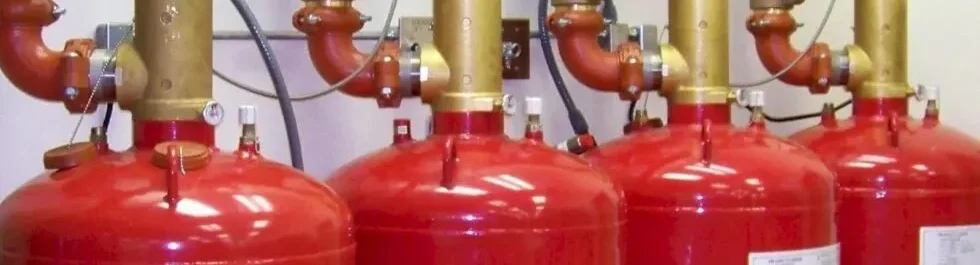
Dry Chemical Fire Suppression Systems
B-Lann Equipment provides inspection and servicing for Ansul IND-X, and installation, inspection, and servicing for PyroChem Monarch and PyroChem Attendant I and II dry chemical systems. These dry chemical systems rapidly suppress high-hazard fires, particularly those fueled by flammable liquids, gases (Class B), and energized electrical equipment (Class C). These fixed systems release a cloud of finely powdered chemical agent through a network of pipes and nozzles to quickly knock down the flames.
How Dry Chemical Fire Suppression Systems Work
When activated, the system rapidly discharges a chemical powder, which is stored under pressure in a cylinder. The discharge is delivered through a proportionally sized piping network and specialized nozzles directly into the area. Dry chemical is effective because it works by interrupting the chemical chain reaction of combustion:
- Chemical interference. The fine particles of the dry chemical agent (such as monoammonium phosphate or sodium bicarbonate) rapidly intervene in the combustion process, breaking the chemical reaction that sustains the fire tetrahedron. This results in flame suppression in seconds.
- Smothering. The agent also acts as a smothering blanket, physically separating the fuel source from the oxygen supply, which helps to prevent re-ignition.
This makes dry chemical systems useful against Class B fires (flammable liquids and gases), and Class C fires (energized electrical equipment) since the agent is non-conductive.
Industries and Situations Where Dry Chemical Fire Suppression Systems are Used
Dry chemical fire suppression systems are used in environments where flammable liquid or gas fires are high risk and where rapid suppression is important to minimizing damage and downtime. They are commonly used in:
- Petrochemical and oil refineries. Protecting fuel loading racks, transfer stations, and processing areas where volatile liquids are handled.
- Industrial coating and painting. Safeguarding large paint spray booths, dip tanks, and mixing areas where flammable solvents are present.
- Transportation and mining. Used to protect the large engine compartments and off-road equipment (like haul trucks and excavators) found in those environments.
- Electrical utility facilities. Protecting sensitive electrical rooms, switchgear, and transformers.
The Importance and Benefits of Dry Chemical Fire Suppression Systems
Dry chemical systems are one of the most effective solutions for controlling and suppressing fires involving highly flammable materials that cannot be fought with water. Some benefits include:
- Exceptional speed. They are known for the fastest flame knockdown time of any suppression agent.
- Wide temperature range. They operate reliably in extremely cold or hot environments where water-based or wet chemical systems would be unsuitable or freeze.
- Non-conductive agent. They safely suppress fires involving energized electrical equipment (Class C) without posing an electrical shock risk.
Maintenance for Dry Chemical Fire Suppression Systems
Regular maintenance is mandatory for reliability and compliance.
- Monthly visual inspections (owner/operator). Quick checks to ensure the system is armed, pressure gauges are in the operational range, seals are intact, and no physical damage or obstructions are present.
- Semi-annual (six-month) professional maintenance. A certified B-Lann Equipment technician must perform a detailed inspection, verifying all detection and electrical components, and testing the actuation system.
- Twelve-year hydrostatic test. The agent storage cylinders and any expellant gas cylinders must be removed, tested under pressure (hydrostatically), and recertified to maintain structural integrity. The agent quality is also checked for clumping or caking.
Following any fire incident or accidental discharge, the system requires immediate professional cleanup of the chemical agent and a full recharge to restore protection.
Installation Process for a Dry Chemical System
The installation of an engineered dry chemical system is a process that must comply strictly with NFPA 17 standards.
- System design and engineering:
- Hazard assessment. Professionals evaluate the specific volume, surface area, and type of flammable hazard to choose the correct agent and determine the necessary flow rate and discharge time.
- Layout and approvals. A detailed layout of the cylinder location, piping, and nozzles is created. This design must be approved by the local authority having jurisdiction (AHJ) and meet NFPA 17 standards.
- Component installation:
- Cylinder mounting. The pressurized storage cylinder(s) containing the dry chemical agent and expellant gas are securely mounted in their designated location.
- Piping network. The discharge piping is run throughout the protected area, following the approved design path.
- Discharge nozzles. Specialized nozzles are strategically mounted to ensure complete and uniform saturation of the area.
- Actuation system. The mechanism (either pneumatic or electronic) that controls the release of the expellant gas is installed and connected to the cylinder valve.
- Detection and control integration:
- Detection system. Heat, flame, or smoke detectors are installed and wired to the central control panel or actuator.
- Releasing controls. The central unit is wired to monitor the detectors, manage the expellant gas release, and activate the system.
- Testing and commissioning:
- Functionality testing. The detection and control systems are thoroughly tested to confirm they activate the release mechanism as designed.
- System check. All components, including the pressure of the agent cylinder and the integrity of the piping, are checked for proper sealing and readiness.
- Final certification. Once the testing is complete and successful, the system is commissioned, certified, and officially tagged as operational.